

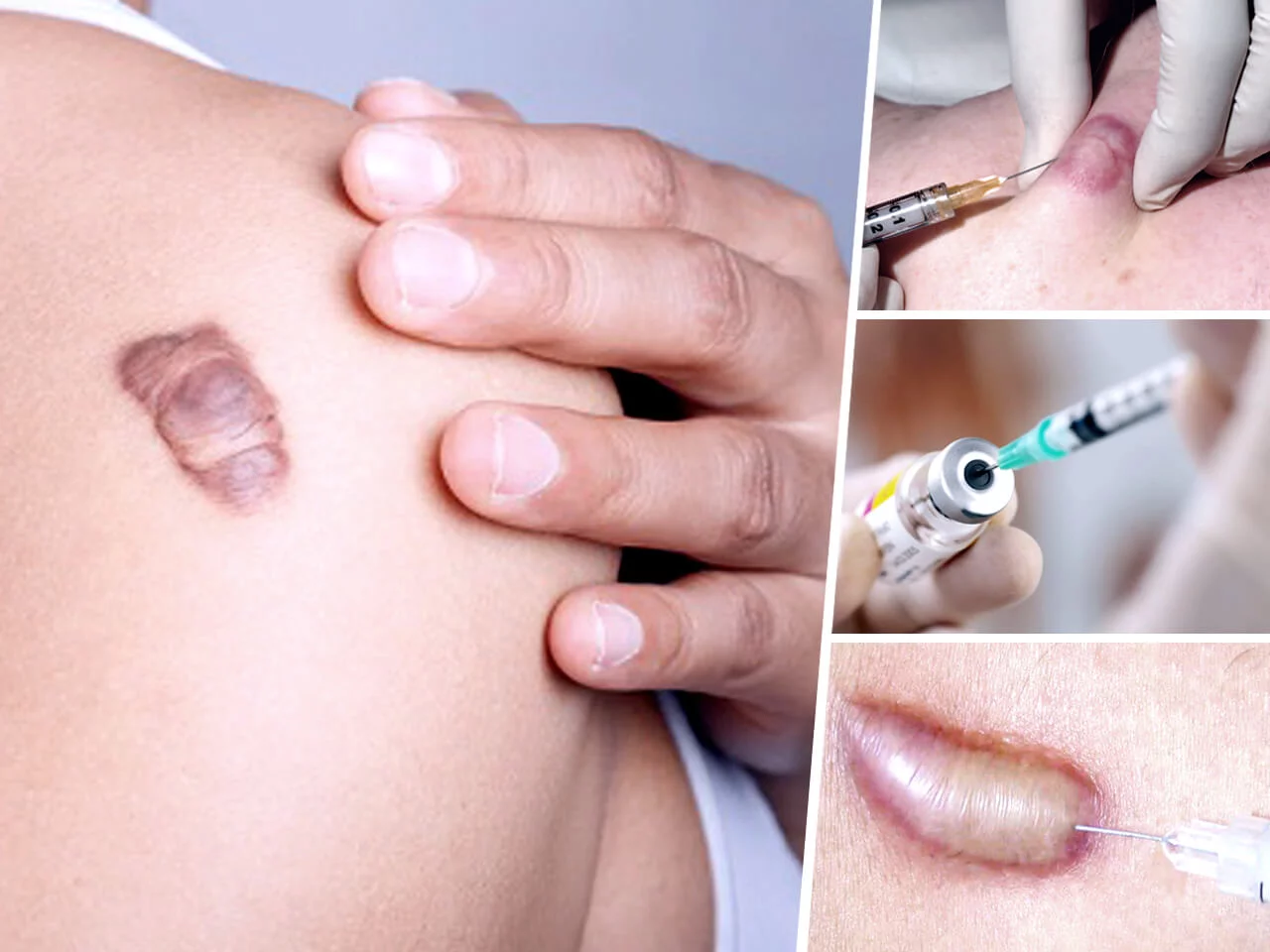
Injections for Keloid Scars
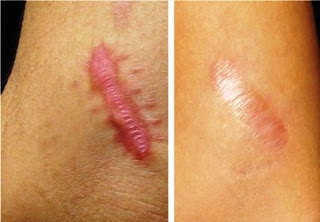
What are Keloids? Keloids are raised, thickened areas of scar tissue that grow beyond the boundaries of the original injury or incision. Unlike normal scars, keloids continue to grow and can become larger than the original wound. They occur when the body produces excess collagen during the healing process. Keloids can be itchy, painful, and cause cosmetic concerns for many patients.
Common Causes of Keloids
Keloids can develop from various types of skin injuries:
- Surgical incisions: Following any surgical procedure
- Piercings: Especially ear piercings and body piercings
- Burns: Thermal or chemical burns
- Acne scars: Severe inflammatory acne
- Vaccinations: BCG vaccine and other injections
- Cuts and scratches: Even minor injuries in predisposed individuals
- Tattoos: Can trigger keloid formation in susceptible people
Who is at Risk?
- Genetics: Family history of keloids
- Skin Type: More common in darker skin tones (African, Asian, Hispanic descent)
- Age: Most common between 10-30 years
- Location: High-tension areas (chest, shoulders, ears, back)
What are Injections?
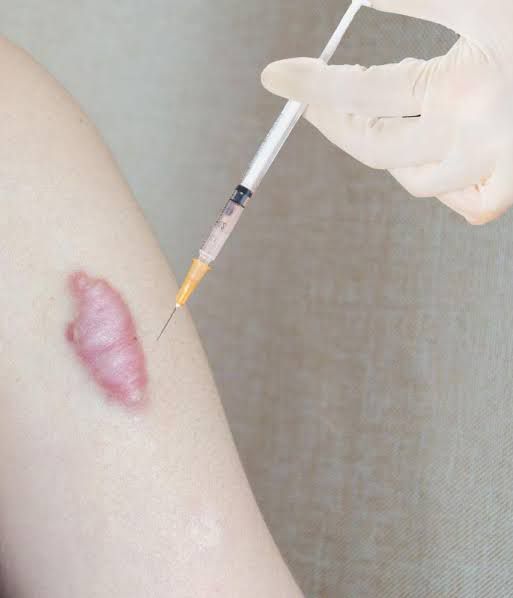
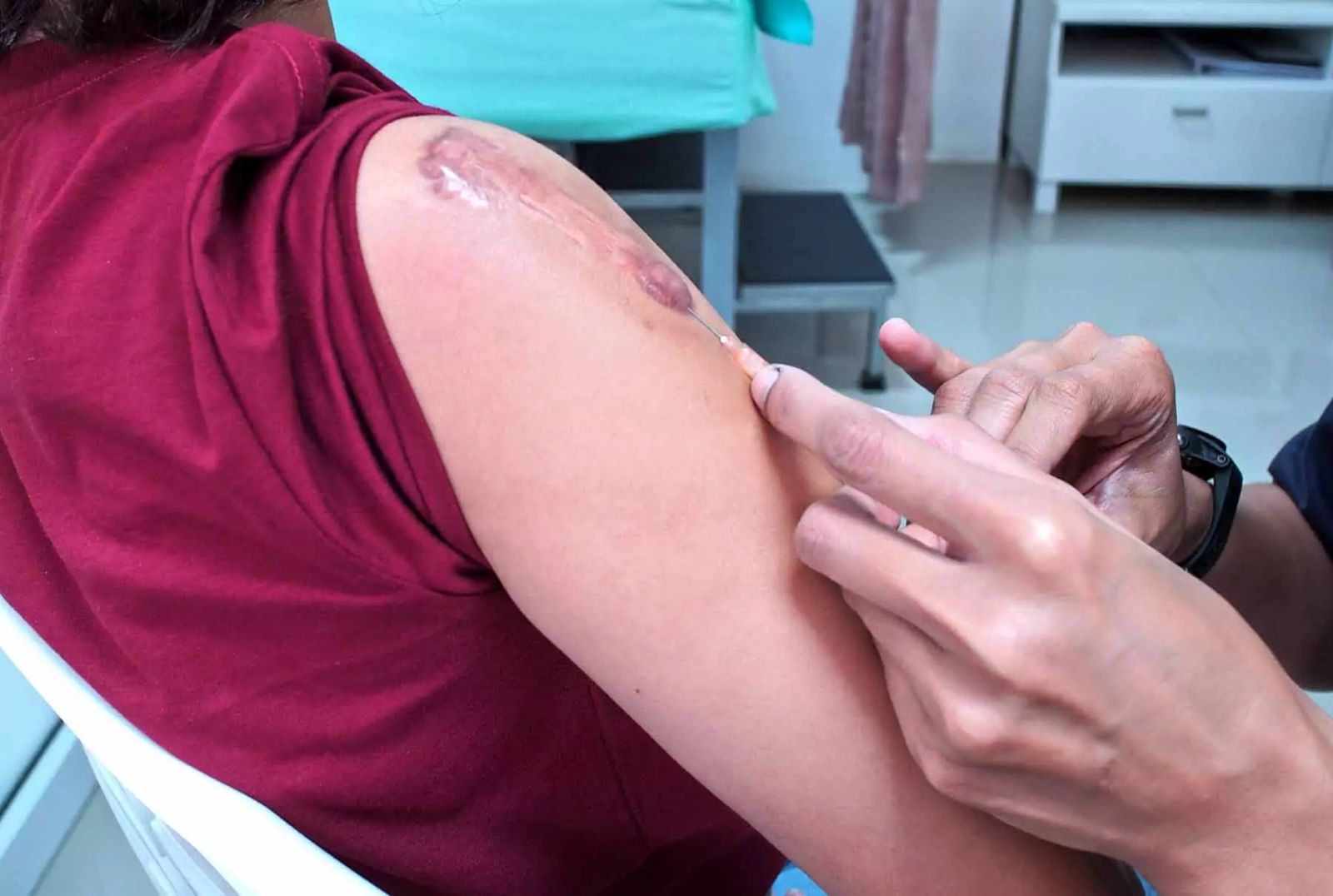
Injections, also known as intralesional injections, are the first-line treatment for keloids. These injections contain powerful anti-inflammatory medications that are injected directly into the keloid tissue.
- Reducing collagen production (the main component of keloids)
- Decreasing inflammation and itching
- Breaking down existing scar tissue
- Flattening and softening the keloid
- Preventing recurrence after surgical removal
The Injection Treatment Process
Step 1: Consultation & Assessment
Your dermatologist will examine the keloid, assess its size, location, and thickness. They'll discuss your medical history, previous treatments, and expectations. Photographs may be taken to track progress.
Step 2: The Injection Procedure
The area is cleaned with antiseptic. Using a very fine needle, the medication is injected directly into multiple points within the keloid. The procedure takes 5-15 minutes depending on the size. Some patients experience mild stinging or burning during injection.
Step 3: Treatment Schedule
Injections are typically given every 4-6 weeks. Most patients need 3-6 sessions for optimal results. Large or stubborn keloids may require more sessions. Improvement is gradual - you'll notice softening and flattening after each session.
Step 4: Maintenance
After achieving desired results, occasional maintenance injections (every 3-6 months) may be recommended to prevent recurrence. Your dermatologist will create a personalized maintenance plan.
Benefits of Keloid Injections
- Non-surgical treatment
- Minimal downtime
- Quick procedure (5-15 minutes)
- Reduces itching and pain
- Flattens raised scars
- Softens hard scar tissue
- Prevents regrowth after surgery
- Improves appearance
Combination Treatments for Better Results
For stubborn or large keloids, we often combine injections with other treatments:
- Surgical Removal + Injections: Keloid is surgically excised, followed by regular injections to prevent recurrence
- Cryotherapy + Injections: Freezing the keloid before injection improves steroid penetration
- Laser Therapy: Helps reduce redness and improve texture
- Silicone Gel/Sheets: Used between injections for maintenance
- Pressure Therapy: Especially for ear keloids
Why Choose Ojas for Keloid Treatment?
At Ojas Skin & Hair Clinic, we specialize in keloid management with a comprehensive approach:
- Expert Dermatologists: Specialized training in scar management and injection techniques
- Personalized Treatment Plans: Customized based on keloid type, location, and your skin type
- State-of-the-art Facility: Sterile environment with modern equipment
- Combination Therapy: Access to multiple treatment modalities for best results
- Proven Track Record: Successfully treated hundreds of keloid patients
- Affordable Care: Competitive pricing with flexible packages
- Long-term Follow-up: We monitor your progress and provide maintenance care
Our approach focuses not just on treating the keloid, but on preventing recurrence and achieving the best possible cosmetic outcome.
Frequently Asked Questions
Most patients experience mild to moderate discomfort during the injection. The sensation is often described as a burning or stinging feeling. However, the procedure is quick (5-15 minutes). We use very fine needles and can apply topical numbing cream beforehand if needed. Many patients find the temporary discomfort well worth the long-term results.
The number of sessions varies depending on the size, thickness, and age of your keloid. Typically, patients need 3-6 sessions spaced 4-6 weeks apart. You'll notice gradual improvement after each session - the keloid becomes softer, flatter, and less itchy. Some large or stubborn keloids may require more sessions. Your dermatologist will assess your progress and adjust the treatment plan accordingly.
Keloids have a tendency to recur, which is why we focus on long-term management rather than just one-time treatment. With proper injection therapy and maintenance, recurrence rates are significantly reduced. For keloids treated with surgery alone (without injections), recurrence rates can be as high as 50-100%. When combined with regular injections, recurrence drops to 10-20%. We'll create a maintenance plan to keep your results looking great.
Side effects are usually mild and temporary. They may include: temporary pain at injection site, skin thinning (atrophy) if over-treated, lightening of skin color (hypopigmentation), visible blood vessels (telangiectasias), and rarely, allergic reactions. Our expert dermatologists use precise dosing and proper technique to minimize these risks. Most side effects resolve on their own or can be treated if they occur.
Most keloids respond well to injection therapy, but results vary. Small to medium-sized keloids typically show excellent improvement. Very large, thick, or old keloids may need combination therapy (surgery + injections + other treatments). Keloids in high-tension areas (chest, shoulders) may be more challenging but still improve with consistent treatment. During your consultation, we'll assess your specific keloid and recommend the most effective approach.
Results are gradual. Within 1-2 weeks after your first injection, you may notice reduced itching and some softening. Visible flattening typically becomes apparent after 2-3 sessions. Maximum improvement is usually seen after completing the full course of treatment (3-6 sessions). The keloid will continue to improve for several months after your last injection as collagen remodeling continues. Patience and consistency are key for optimal results.
The cost varies based on the size of the keloid and number of sessions required. Small keloids cost less per session, while large or multiple keloids may require more medication and time. We offer competitive pricing and package deals for multiple sessions. During your consultation, we'll provide a detailed cost estimate based on your specific needs. Contact us for current pricing and any ongoing offers.